It's very hard to take The Phantom of the Opera seriously when one was raised singing along to Riders in the Sky's Phantom of the Chuckwagon (I recognize, that by linking to that, I have probably sacrificed any credibility this post will have.) And sure enough, when I watched a performance of Phantom for the first time, it was easy to mock. Ostentatious, theatrical, melodramatic, shamelessly populist - it's a mishmash of 80s rock, Broadway musical numbers, and just a bit of real opera, all knitted together by the plot of a 1910 novel, Le Fantôme de l'Opéra. But there's something more than that - an honesty lacking from many such stories.
Showing posts with label truth. Show all posts
Saturday, February 14, 2015
The Phantom of the Opera - Grace and Truth
It's very hard to take The Phantom of the Opera seriously when one was raised singing along to Riders in the Sky's Phantom of the Chuckwagon (I recognize, that by linking to that, I have probably sacrificed any credibility this post will have.) And sure enough, when I watched a performance of Phantom for the first time, it was easy to mock. Ostentatious, theatrical, melodramatic, shamelessly populist - it's a mishmash of 80s rock, Broadway musical numbers, and just a bit of real opera, all knitted together by the plot of a 1910 novel, Le Fantôme de l'Opéra. But there's something more than that - an honesty lacking from many such stories.
Thursday, May 29, 2014
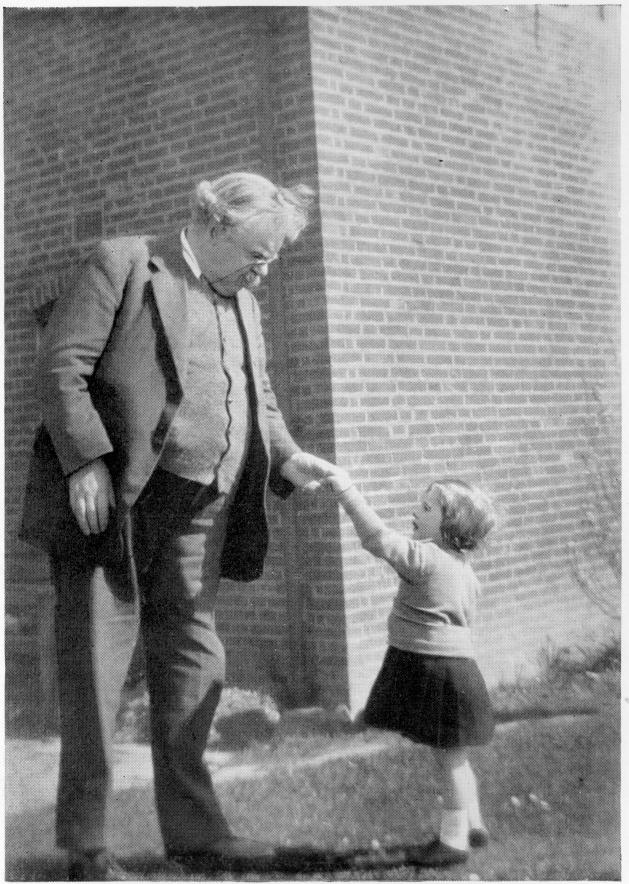
Happy 140th Birthday, G.K. Chesterton
Chesterton lived and breathed on paradox. His ability to enlighten me on matters spiritual is nearly immeasurable, but there's the rub: he may only enlighten those things which one already knows, which already lurk in the mind and form the basis of his favorite virtue: common sense. No other author has such a talent for revealing to me the truths that are, or should be, immediately evident.
This is, in fact, the premise of one of his greatest books: Orthodoxy. In it, he voiced many of the questions that plagued him as a young seeker.
"How can we contrive to be at once astonished at the world and yet at home in it?"
"Why should ANYTHING go right; even observation and deduction? Why should not good logic be as misleading as bad logic? They are both movements in the brain of a bewildered ape?"
"Can [one] hate [the world] enough to change it, and yet love it enough to think it worth changing?"
Wednesday, January 2, 2013
Subjects with Objects
A bit late to be doing this, but this is a really neat project. DKM is a poet, a poet with a mission. In this article on The Rabbit Room, he explains:
"Several years ago, public spaces painter Jonathan Richter invited me to create pieces with him for a gallery show. Richter spends evenings in public spaces (mostly pubs) painting an ongoing series of off-kilter, spontaneous portraits. These paintings give off a vaguely disturbing, surreal aura, sometimes seeming fraught with a subconscious and archetypal symbolism, other times feeling like fragments from the watery language of dreams. At any rate, Richter is quick to say that the pieces in this series are not created with forethought or planning. Rather they emerge from the process itself, from the layering of paint, the subjects sometimes achieving a definite shape only towards the end of the physical process. Once the paint has dried, Richter turns the paintings over to me. I meditate on the images, mulling the portraits for however long it takes to begin to tease out their secrets such that I can express something of their essence in a line or two of poetic prose. There’s something about this process of filtering a work through two imaginations that seems to put a finer edge on it. Like double-distilling a vodka....
"Some reveal their secrets within a few minutes time. Others take hours, even days before the meaning begins to emerge. I return over and over to the clearing where I sit and wait for something to step into the open and give me a clear line of sight....
"...I can’t help but believe that what I do believe is more wildly and frighteningly and wonderfully romantic than any merely emotional or sensational experience the romantics would have deemed romantic. Is it not more wildly romantic to operate from a premise that every facet, detail, and pattern in creation, even those that we perceive as random, are fraught with meaning far beyond our ability to comprehend? To believe that the stars are singing? To believe that the objective evidence points to the conclusion that we are living in an actual fairy tale?...
"Romanticism is dead. Long live romance."
DKM and Jonathan Richter only have a few more hours to complete their $7,500 goal. If they don't, all the money pledged so far will be returned. There are eight hours left. I've donated thirty dollars, which means I'll be getting a signed copy of the book, unless they don't get funding. I WANT a copy. Go here to help them out.
Longish
"Several years ago, public spaces painter Jonathan Richter invited me to create pieces with him for a gallery show. Richter spends evenings in public spaces (mostly pubs) painting an ongoing series of off-kilter, spontaneous portraits. These paintings give off a vaguely disturbing, surreal aura, sometimes seeming fraught with a subconscious and archetypal symbolism, other times feeling like fragments from the watery language of dreams. At any rate, Richter is quick to say that the pieces in this series are not created with forethought or planning. Rather they emerge from the process itself, from the layering of paint, the subjects sometimes achieving a definite shape only towards the end of the physical process. Once the paint has dried, Richter turns the paintings over to me. I meditate on the images, mulling the portraits for however long it takes to begin to tease out their secrets such that I can express something of their essence in a line or two of poetic prose. There’s something about this process of filtering a work through two imaginations that seems to put a finer edge on it. Like double-distilling a vodka....
"Some reveal their secrets within a few minutes time. Others take hours, even days before the meaning begins to emerge. I return over and over to the clearing where I sit and wait for something to step into the open and give me a clear line of sight....
"...I can’t help but believe that what I do believe is more wildly and frighteningly and wonderfully romantic than any merely emotional or sensational experience the romantics would have deemed romantic. Is it not more wildly romantic to operate from a premise that every facet, detail, and pattern in creation, even those that we perceive as random, are fraught with meaning far beyond our ability to comprehend? To believe that the stars are singing? To believe that the objective evidence points to the conclusion that we are living in an actual fairy tale?...
"Romanticism is dead. Long live romance."
DKM and Jonathan Richter only have a few more hours to complete their $7,500 goal. If they don't, all the money pledged so far will be returned. There are eight hours left. I've donated thirty dollars, which means I'll be getting a signed copy of the book, unless they don't get funding. I WANT a copy. Go here to help them out.
Longish
Labels:
art,
Christianity,
Douglas McKelvey,
God,
meaning,
truth
Saturday, December 29, 2012
Beauty is truth, truth beauty - Except It Isn't
"Beauty is truth, truth beauty" is a line written by romantic poet John Keats. Being a Christian and having a philosophical bent, I'd always thought he meant the truth is beautiful, but as Doug McKelvey points out in this terrific article over on the Rabbit Room, he meant just the opposite. It means that if a thing is beautiful, it is the truth. If it makes me feel good, it is good.
McKelvey's article challenges the idea that art can be meaningless, an outpouring of pointless emotion. Instead, he declares the Christian belief that there is intrinsic meaning in everything, that that idea extends even to abstract art and stream-of-consciousness writing. It's also harder to do right, but it's worth it. Because, after all, if...
Meaningless art is just the easy way out. As a writer who spends a lot of time crafting, and, as Hemingway said, "getting the words right", this affirmation of the try-again-and-again-till-it's-just-right approach versus the flash-bang!-inspiration-equals-automatic-product school is refreshing. (Even better, he called it a holy vocation. Cool.)
McKelvey believes that, as Flannery O'Connor said, there are "lines of spiritual motion" in everything, and it is the artist's job to discover them. And it might mean there's a greater romance than the romantics every dreamed. What is it? Read the article to find out.
Longish
McKelvey's article challenges the idea that art can be meaningless, an outpouring of pointless emotion. Instead, he declares the Christian belief that there is intrinsic meaning in everything, that that idea extends even to abstract art and stream-of-consciousness writing. It's also harder to do right, but it's worth it. Because, after all, if...
If things meant something, if art incarnated ideas and if ideas had consequences, if truth was not the same as beauty (at least not in the way that Keats believed it), then I was responsible for the impact of the things I made and therefore had need to be sensitive and discerning. It wasn’t enough just to spin evocative, poetic phrases that were fragments of no greater whole. This was a holier vocation than I had imagined.
Meaningless art is just the easy way out. As a writer who spends a lot of time crafting, and, as Hemingway said, "getting the words right", this affirmation of the try-again-and-again-till-it's-just-right approach versus the flash-bang!-inspiration-equals-automatic-product school is refreshing. (Even better, he called it a holy vocation. Cool.)
McKelvey believes that, as Flannery O'Connor said, there are "lines of spiritual motion" in everything, and it is the artist's job to discover them. And it might mean there's a greater romance than the romantics every dreamed. What is it? Read the article to find out.
Longish
Subscribe to:
Posts (Atom)