Showing posts with label Catholicism. Show all posts

Monday, May 22, 2017

Doctor Who Series 10 - Extremis - Episode Review

Image result for doctor who extremis
My review of the previous episode: Oxygen.

Oh, Moffat.

Steven Moffat is one of the greatest visionaries in Doctor Who history. He’s written multiple classic episodes and pushed the boundaries of the show in ways that no one has before. But there's a reason "Moffaty" exists as an adjective. And Extremis is very Moffaty.

Wednesday, December 28, 2016

The World's a Small Place


As I wove through the streets of Antigua, sidestepping trash and leaping onto the curb just in time to avoid a motorcycle shooting through traffic, I wondered why I didn't feel disoriented. Over the scene loomed a mist-haloed volcano - it wasn't active, but the other volcano on the other side of town had been spewing lava down its side all day, a track of glowing orange in the distant night sky. The smell of frying meat and melted cheese (mixed with the ubiquitous Diesel fumes) made my stomach grumble. Musical Spanish voices crowded the night air; I had to focus to pick out my meager vocabulary from the jumble, respond, and then shell out a few Quetzales for a meal. 

And bizarrely, I felt right at home.

Thursday, May 29, 2014

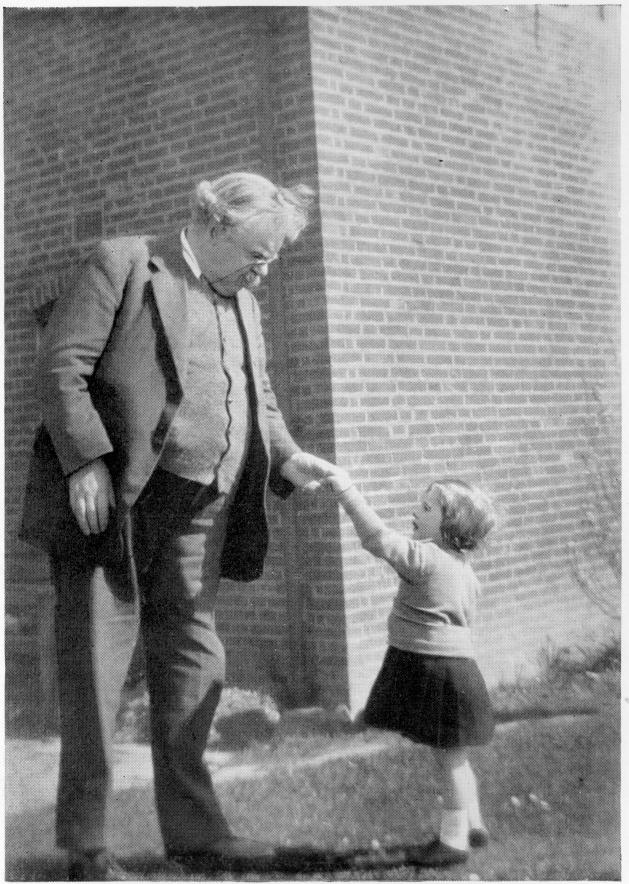
Happy 140th Birthday, G.K. Chesterton

I think it's probably a fair bet to say that no author has taught me more than G.K. Chesterton. On the other hand, the author who has taught me least would have to be, yep, G.K. Chesterton. It's an appropriate paradox.

Chesterton lived and breathed on paradox. His ability to enlighten me on matters spiritual is nearly immeasurable, but there's the rub: he may only enlighten those things which one already knows, which already lurk in the mind and form the basis of his favorite virtue: common sense. No other author has such a talent for revealing to me the truths that are, or should be, immediately evident.

This is, in fact, the premise of one of his greatest books: Orthodoxy. In it, he voiced many of the questions that plagued him as a young seeker.

"How can we contrive to be at once astonished at the world and yet at home in it?" 
"Why should ANYTHING go right; even observation and deduction? Why should not good logic be as misleading as bad logic? They are both movements in the brain of a bewildered ape?" 
"Can [one] hate [the world] enough to change it, and yet love it enough to think it worth changing?"

Tuesday, October 8, 2013

Les Miserables - When It's Good It's Very, Very Good - Part 2


Warning: Absolutely packed with spoilers. Though I know this is 100+ years after it was published, most of the major plots twists in this book were ruined for me through the internet. So. I'm warning you.

In the first half of this post, I reviewed the story and more practical elements of Les Mis - in this follow-up, I get into the philosophy. That's code for: this will be boring to everyone but Hannah Long. Also, I am writing this from a Christian perspective, and am critiquing ideas by comparing them to theology, so Prepare Yourself.

Thursday, September 19, 2013

The Dean's Watch Review/Quotes

Sometimes you run into a book that has to be savored. The Dean's Watch, by Elizabeth Goudge, is such a book. I told my dad, on finishing it, that she must have been a person who deeply loved the beauty of creation. She loved it so much, that when she describes the world, you can feel the joy pulsing just beneath the skin of the words. Like all artists, the creation process is a deeply important part of her view of God, and is intrinsic to the theology of The Dean's Watch.

The setting is a remote mid-nineteenth-century town in England and its grand cathedral. The cathedral Dean, Adam Ayscough, holds a deep love for his parishioners and townspeople, but he is held captive by an irrational shyness and intimidating manner. The Dean and Isaac Peabody, an obscure watchmaker who does not think he or God have anything in common, strike up an unlikely friendship. This leads to an unusual spiritual awakening that touches the entire community.
Elizabeth Goudge's books are hard to find, but well worth the search. The book is, in essence, a small story, about small people, but is contrasted against the majestic looming symbol of the Cathedral which is the city which is faith itself. Goudge has great talent in taking the most unsavory characters and finding something likable - even lovable - about them, furthering the novel's primary theme: Christian charity, to love even the unlovely.

My only complaint about the book would be that it is slowly paced, and sometimes tedious. Pressed by work, I don't have the time to review more fully, but even better, I chose some of the choice quotes.

Thursday, April 25, 2013

Brideshead Revisited Quotes

I really don't have time to review every book I read, but I couldn't resist sharing some of the tidbits I discovered...I also admit, that part of the reason I didn't want to review this was because I don't think I'm quite up to the task.

Brideshead Revisited:

Charles Ryder's description of his worldview:

The view implicit in my education was that the basic narrative of Christianity had long been exposed as a myth, and that opinion was now divided as to whether its ethical teaching was of present value, a division in which the main weight went against it; religion was a hobby which some people professed and others did not; at the best it was slightly ornamental, at the worst it was the province of "complexes" and "inhibitions" - catchwords of the decade - and of the intolerance, hypocrisy, and sheer stupidity attributed it for centuries. No one had ever suggested to me that these quaint observances expressed a coherent philosophic system and intransigent historical claims; nor, had they done so, would I have been much interested.

Interesting that things have changed so little. I might mention that this phrase only occurs in older editions, it was replaced with a different perspective in the 1960 version.

Saturday, December 1, 2012

The Tone of The Hobbit

Over the last five or so years, my mom asked me many times, “Do you think Peter Jackson will do The Hobbit?”

And for the last four, I always said, “No way!”

“Why not?” she’d ask.

“It’s not like The Lord of the Rings,” I’d say, sagely. “It’s a children’s book. There are fifteen primary characters with nearly indistinguishable names. It has talking trolls named William and Tom. The elves sing ‘tra-la-lally.’ Need I say more?”

I am now eating crow, for my mother’s hopes were right. But the crow, to use a weathered phrase, tastes like chicken. I was delighted when I found out that PJ was, in fact, doing The Hobbit. Doubtful, but delighted. It was quickly confirmed, and I could give full rein to my excitement.

Soon enough, however, the cynicism crept in again. The Cast? Who’s Bilbo? Have they got Ian McKellen? TWO movies? Will the trolls talk? Tra-la-lally?

The cast was near-perfect, Bilbo certainly was, there are now three movies, and yes, the trolls talk. No news on the tra-la-lally, yet. Over the months, if I’ve been bored, I can drum up a bit of Hobbit excitement on TheOneRing.net. Now, the Day is almost here, but my traitorous brain is still trying to find reasons that PJ and the crew will go wrong.

It won’t be like the book. It’ll have a lot of corny humor. It’ll be (horror of horrors) politically correct. It’ll be a Ready-Made Blockbuster. Tolkien will be blasphemed.

But over the last few days, some really interesting things have popped to my attention, most of which were Phillipa Boyens’s comments.