Monday, January 4, 2016
Endeavour Season 3 - Ride - Episode Review
My review of last season's finale: Neverland
Well, that was unexpected.
After a few seasons, TV shows tend to sink into a comfortable rut, doing what they do best, refusing to stretch their limits. Endeavour did the impossible by pleasing fans of Inspector Morse with a nostalgic but courageously new pilot and first season. In season two, they tried to deepen the story a bit by hinting at the darkness creeping into Morse's life, and while the finale was gripping, the season as a whole lacked the freshness and verve of the early episodes. But Ride, the first episode of season three, gives the entire show a rehaul, both thematically and aesthetically. Endeavour is back, and it's better than ever.
[SPOILERS]
Labels:
Anton Lesser,
drugs,
Endeavour,
Endeavour reviews,
Endeavour series 3,
Inspector Morse,
Jack Laskey,
memory,
murder,
murder mysteries,
privilege,
Roger Allam,
Shaun Evans,
The Great Gatsby,
the past
Sunday, January 3, 2016
Sherlock - The Abominable Bride - Review
My review of the season 3 finale
Objectively speaking, The Abominable Bride is quite bad. It’s the sort of mess of fan service, self-indulgence, and petty delay which has become a hallmark of Sherlock since The Empty Hearse. But that’s not to say it isn’t enjoyable, in all its illogical absurdity.
The episode begins with a lightning recap of the first three seasons which reminds long-time viewers of a few series high points but does little to enlighten new fans. It then gives us a “what if” transition into an alternate universe. It’s 1895, post-Reichenbach, and Watson and Holmes are returning to 221B from a case. They’re just in time to meet Lestrade, who needs Holmes’s assistance on a murder.
It all began (he informs them) when the titular bride, Emelia Ricoletti, went mad and started taking potshots from her balcony at passersby, before blowing a hole in the back of her head. Later that evening, on his way to identify her corpse, her husband was stopped in the street by a creepy-looking woman in a wedding dress.
You can see where this is going. Emelia removes her veil and plugs her husband full of lead before evaporating into the mist. A series of similar murders crop up around the country, meaning Lestrade and Watson immediately think ghost rather than copycat murderer. Thankfully, Holmes is here to remind us several times ghosts don’t exist, and poetry is never true unless you’re an idiot. Hashtag the Enlightenment. Neil deGrasse Tyson would be proud.
Coroner Hooper (Louise Brealey with a stache) confirms that the Bride is most certainly dead, so it’s even more puzzling when Holmes and Watson are referred by Mycroft (satisfying canon with extreme girth), months later, to a wife who reports her husband, Sir Eustace Carmichael, is seeing the Bride. First of all, he receives orange pips in the mail, obviously a threat (Sherlockians will recognize the reference to The Five Orange Pips), and then begins to ramble on about seeing the Bride, who has come to exact revenge for some secret sin. When Holmes and Watson visit Sir Eustace, however, he denies the accusations, dismissing his wife’s story as female hysteria (hashtag misogyny).
Saturday, January 2, 2016
Tuesday, December 15, 2015
In Memoriam: Anthony Valentine

Anthony Valentine, who died two weeks ago, was one of my first TV crushes. Suave, reptilian, and utterly charming, his charisma swept my teenage self off my feet. Of course, it helped that he was British. I've always had a weakness for our Anglo-Saxon brethren. And even better, he was incredibly funny.
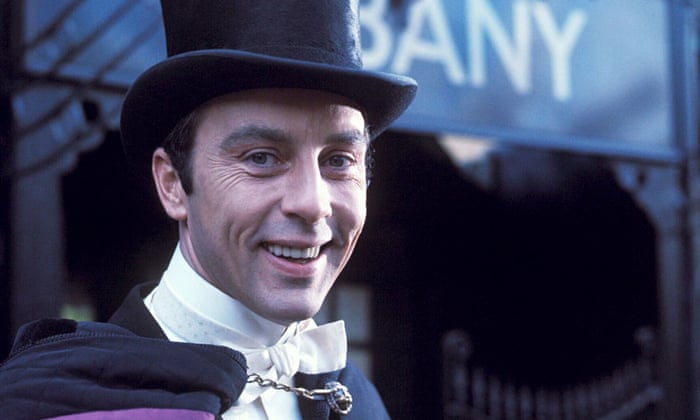
I was first introduced to Valentine through his portrayal of the dashing gentleman thief, A.J. Raffles, on DVD. The show was from 1977, and these days looks rather clunky and dated, but Valentine's performance remains a masterpiece, sparkling with wit and charm. The part was perfectly suited to his talents (Nigel Havers and Ronald Colman don't hold a candle): Raffles is Sherlock Holmes's evil twin - a genius cat burglar in Victorian England, his adventures chronicled by a bumbling, fawning sidekick - Harry "Bunny" Manders (Christopher Strauli). The two men swan about through high society, robbing the arrogant rich to give to the deserving poor (in this case, themselves), dogged by an intrepid, friendly, but stupid police inspector (in this case, Mackenzie), in stories written by a member of the Conan Doyle family (in this case, Sir Arthur's brother-in-law, E.W. Hornung).
Sunday, November 29, 2015
St. Crispin's Day
Wednesday, November 25, 2015
Why Cave Drawings Prove You're Special
If you want to be sure you're not special, take a college biology class. All illusions of grandeur will be crushed by the power of Science. You evolved just like everyone else, buster. Don't get all high and mighty just because you've got opposable thumbs.
Belief can be explained away as the result of an ancient impersonal process. Our bodies are made up of tiny building blocks, each bearing a label of letters or numbers. Sex is laid out and explained as a mechanical process. It is neither holy nor mysterious (though still rather embarrassing.) Love comes down to chemicals. In the class, our purpose is - as Keats put it - to "Conquer all mysteries by rule and line/ Empty the haunted air, and gnomed mine..." to "Unweave a rainbow..."
But even in the rarefied air of college classrooms, common sense cannot be suppressed. Some blustery day last winter my biology teacher displayed a row of pictures on the Powerpoint paralleling animal fetuses, outlined, glowing pink in the womb. She pointed to the pharyngeal arches (gill slits) and tail on the human fetus, using the similarities to demonstrate a larger truth about common ancestry. The physical similarities between humans and animals were, indeed, marked. Nothing on the glowing screen showed a magical difference between man and beast.
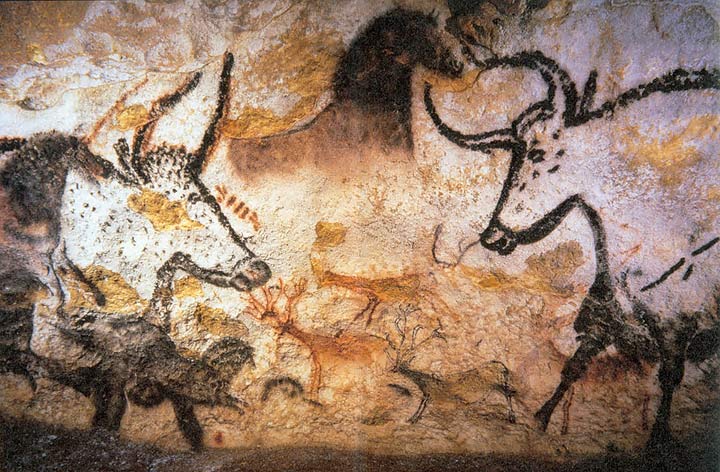
I must have drifted off for a while, because the next thing I knew, she had moved on to cave-men. One mysterious question, she explained, was how European cave drawings featured creatures like rhinoceroses and other non-European animals. Obviously, they could not have seen these things themselves, as travel was just not practical. "My own theory," she said, "is that their ancestors saw these things and passed down the story from generation to generation. They remembered. That's how they knew about it."
Wednesday, November 11, 2015
Happy Veterans' Day
And said "No chain shall sully thee / Thou soul of love and bravery / Thy songs were writ for the pure and free / they shall never sound in slavery."
Longish
Longish
Wednesday, November 4, 2015
Inspector Lewis - What Lies Tangled - Episode Review
My review of last week's episode.The final episode of Inspector Lewis begins with long, loving shots of Oxford landmarks (perhaps a bit longer and more loving than usual?), as a woman reads a philosophical passage of The Brothers Karamazov. Drops of quicksilver plink one by one into a petri dish. Businessman Adam Capstone looks out a window and sips his coffee just before...the...bomb...goes...off. It's a shocking and elegant moment as the shrapnel floats away in slow-motion. The slow-mo does two things: it draws our attention to the passage of time, and grants the murder just a bit more weight than usual.
Subscribe to:
Posts (Atom)