Showing posts with label Thomas More. Show all posts

Tuesday, May 17, 2016

Man Named Moore Opposes King With Many Wives


Satire                                                                                                                                                         

Once upon a time there was a king who knew what he wanted. Bombastic, paunchy and orange, the king was born with a silver spoon in his mouth—a classy spoon, a whole set of cutlery, in fact, the best spoons. The orange king was flexible, changeable, a really strong man. If the king didn’t get what he wanted, he didn’t care if it meant splitting the Christian world in half, he’d get it done.

The king had a difficult relationship with his wife, largely because he was tired of just having one. “We’re gonna split up,” he said. “Maybe we’ll build a wall between us—it’ll be a yuge divorce, I mean, really big, a great divorce. We’re gonna make divorce great again.” So that’s what the king did, discarding his first wife and marrying his mistress. Even then, the king was not satisfied and sought a third, model wife. “I can’t help it, they like me. Alpha males have lots of wives,” said the king. Classy!


Friday, September 4, 2015

Kim Davis vs. Sir Thomas More - How Now Shall We Disobey?

The latest battle in the gay marriage debate: I'm sure you know the story. Kim Davis is the county clerk in Rowan County, Kentucky. Since the Obergefell decision, she has refused to hand out any marriage permits to either gays or straights, nor to authorize her deputies to do the same. She's now been held in contempt of court and thrown in jail.

These confrontations have become more and more common as the American government begins to tackle the gay marriage issue. Post-Obergefell, there's no reason to imagine the numbers will go down. Kim Davis is merely an opening skirmish.

As per usual when these issues surface, my immediately appeal for guidance is to historical cases I admire. Above all, I think of my favorite meditation on religious freedom, the film A Man for All Seasons, which examines the conflict between personal conscience and obeying the government.

Sir Thomas More was chancellor of England when King Henry VIII decided to amend the law, dissolve his own marriage, separate from the church of Rome, and declare himself lord over the newly-established Anglican church. More - a devout Catholic - heartily objected to the king's decision, but was aware of the danger of saying so. Instead, he resigned his post.

Monday, July 6, 2015

A Tale of Two Thomases: Wolf Hall vs. A Man for All Seasons


It’s 1535. The prison is shrouded in deep shadow; only a thin white light illumines the fierce human drama taking place within its stone walls. Weak from long imprisonment, Sir Thomas More gazes fixedly at his cruel-faced inquisitor, Thomas Cromwell. They’re sizing each other up, pondering, deliberating, performing a dozen separate mental calculations. It's a meeting of great political minds, and neither will cave.

Fiction is like a mirror of society. If we are to know what a generation feels, we must look at its stories, its narratives, its fantasies. And it's difficult to think of a better example than the way the story of Thomas More and Thomas Cromwell has evolved over the years.

Within the last half-century, both have been the subject of wildly popular biopics. The first, 1966 film A Man for All Seasons, scooped up six Oscars and five BAFTAs. The other, 2014 miniseries Wolf Hall (based on the novel by Hilary Mantel), arrived amidst a flurry of critical applause, and will probably accomplish similar feats once awards season rolls around. Obviously, there's something about these two historical figures that captivates us.

Sunday, July 27, 2014

Meet His Grace - Why You Should Read Archbishop Cranmer

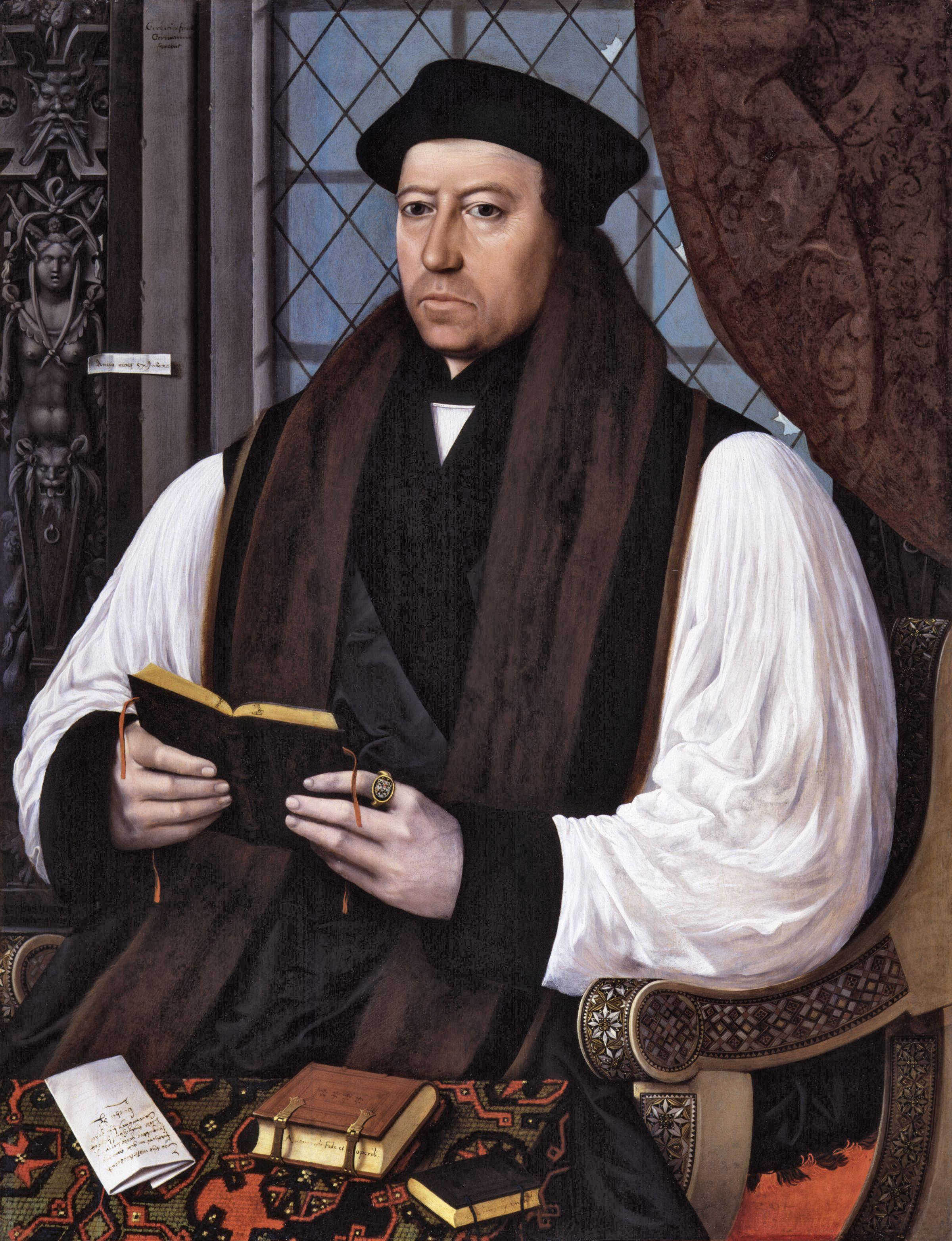
There's a great deal of irony that it was while googling Sir Thomas More that I discovered religio-political commentator/blogger Archbishop Cranmer. For those of you not up on your history of the Church of England (shame, shame), Thomas Cranmer (1489-1556) was the first protestant Archbishop of Canterbury, compiled a good segment of the Book of Common Prayer, recanted his protestant convictions under Catholic queen Mary, was convicted to burning at stake, recanted his recantation, and died a martyr. Before that, he helped accomplish the divorce which Thomas More died rather than consent to (not to mentioning being part of the group that interrogated More).

Of course, I'm not talking about that Cranmer. I'm talking about his 21st Century reincarnation as an anonymous political blogger. His Grace, as he calls himself, posts regularly from a shamelessly Anglican perspective on politics in and out of the church. As is evident from the stream of testimonials on His Grace's page, he's widely read and respected in the U.K. (even Richard Dawkins has found time to emerge from his lair and call him "very nasty indeed"), and he presents a reasonable and intelligent commentary on most relevant issues, even when I don't agree with him. In particular, he has kept me up to date on the state of the church in Iraq (it's dire.)

Sunday, July 6, 2014

In Defense of “Under God" - Religious Freedom, Theocracy, and Me

Yes, this is me saying the Pledge. I don't know what my brother's doing.
"'What Better Work For One Who Loves Freedom Than the Job of Watchman. Law Is The Servant of Freedom. Freedom Without Limits Is Just A Word,' said Dorfl ponderously.
"'Y'know...if it doesn't work out, you could always get a job making fortune cookies.'"
~Terry Pratchett, Feet of Clay

I've always taken the Pledge of Allegiance very seriously. Perhaps it was the deep strain of solemn Phariseeism in me, but when other children mumbled and rolled their eyes through the pledge, I would slap my hand to my heart and tearfully proclaim my earnestness for Americanism and all it entailed.

I remember once, hearing a fellow pledger replace "liberty and justice for all" with a surreptitious "liberty and justice for most." How dare he? I fumed mentally. That's so disrespectful! If you're going to give your word, you should really mean it. There's some irony there, because his nicety should have force me to realize that all the time I had said the pledge, it had never occurred to me to ask that most relevant of questions: do I believe it?

And I wasn't sure.