Thursday, May 29, 2014

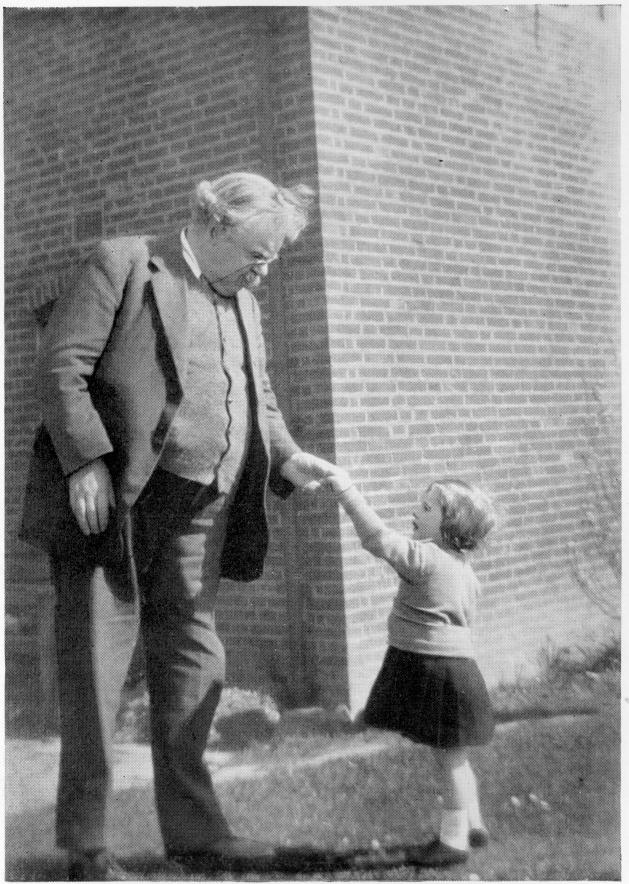
Happy 140th Birthday, G.K. Chesterton

I think it's probably a fair bet to say that no author has taught me more than G.K. Chesterton. On the other hand, the author who has taught me least would have to be, yep, G.K. Chesterton. It's an appropriate paradox.

Chesterton lived and breathed on paradox. His ability to enlighten me on matters spiritual is nearly immeasurable, but there's the rub: he may only enlighten those things which one already knows, which already lurk in the mind and form the basis of his favorite virtue: common sense. No other author has such a talent for revealing to me the truths that are, or should be, immediately evident.

This is, in fact, the premise of one of his greatest books: Orthodoxy. In it, he voiced many of the questions that plagued him as a young seeker.

"How can we contrive to be at once astonished at the world and yet at home in it?" 
"Why should ANYTHING go right; even observation and deduction? Why should not good logic be as misleading as bad logic? They are both movements in the brain of a bewildered ape?" 
"Can [one] hate [the world] enough to change it, and yet love it enough to think it worth changing?"

Tuesday, May 20, 2014

Tolkien on the Incarnation


Incarnation proves the intrinsic worth of each human person. 
~J.R.R. Tolkien, Letter 136

The Incarnation of Jesus Christ was one of the central ideas in J.R.R. Tolkien's theology. Besides his philological attention to the whole idea of the word-made-flesh, he was interested in in the Incarnation’s refutation of the perceived schism between body and spirit, an idea particularly fostered in modern times. In the good old days, it was branded a heresy: Gnosticism. The Gnostics believed in the supremacy of the spirit over uncouth bodies. The vice versa equivalent would probably be modern secular materialism, placing all emphasis on what can be quantified. Both ideas are popular now, with trendy pop-Buddhism taking the place of Gnostic spiritualism.

Saturday, May 3, 2014

Sara Groves - Invisible Empires - Album Review

I still remember the day I saw that stories were about more than events, but ideas, characters, and truth. This discovery didn't extend into music until recently. Could there be an equivalent of great literature in music? I watched the ideas. Andrew Peterson’s Light for the Lost Boy takes on the loss of innocence, and ultimate redemption. Matthew Perryman Jones’s impossibly good Land of the Living is so complex I still haven’t figured it all out, but dabbles in sin, death, grief, and redemption. I leapt into the stimulating world of ideas and their expression through music and poetic metaphor.

Sara Groves’s Invisible Empires is a first, though. She takes on ideas, all right, but ones that you generally wouldn’t find in music and certainly not in the mainstream CCM. Ideas like: bio-ethics, escapism, current politically correct ideology, the pressure to conform to society’s ideal, and death. It sounds more like science fiction topics.

Wednesday, April 23, 2014

Endeavour Season 2 - Neverland - Episode Review


My review of last week's episode: Sway

The season finale begins with Nunc Dimittis, the Canticle of Simeon (here's a good recording):

Lord, now lettest Thou Thy servant
depart in peace
according to Thy Word,
for mine eyes have seen Thy salvation
which Thou hast prepared
before the face of all people.
To be a Light to light on the Gentiles
And to be the glory of Thy people Israel.
Glory be to the Father
And to the Son
And to the Holy Ghost,
As it was the beginning,
Is now and ever shall be,
World without end. Amen.

The music is intercut with scenes of D.I. Thursday who, like Morse at the very beginning of the season, is taking a medical exam. Resembling Simeon, Thursday feels the encroachment of age, and the advent of a younger generation. We’ve always known that, however enjoyable, the Thursday-Morse partnership couldn’t go on forever. From the first moments of Neverland, we feel that gentle shift begin.

Saturday, April 19, 2014

Endeavour Season 2 - Sway - Episode Review


My review of last week's episode: Nocturne

Endeavour is certainly hitting all the common detective series Trope episodes early on. Usually, it takes a few seasons before we have the Serial-Killer-With-A-Vendetta-For-Our-Hero episode, or the Meet-The-Family episode, or the Old Flame episode. Endeavour used all three in the first season. I initially thought this week's installment was a repeat of Fugue - a Serial Killer thriller, but it turns out the mystery itself is secondary to the emotional drama of an Old Flame.

Friday, April 11, 2014

Endeavour Season 2 - Nocturne - Episode Review


My review of last week's episode: Trove


This week’s episode of Endeavour takes a Scooby-Doo twist, complete with a haunted mansion, creepy little girls, and a historical mystery. Most series have one or two murder-in-the-past episodes, practically all the Sherlock Holmes short stories have some link to history, with Poirot it’s Five Little Pigs and Elephants Can Remember, with Father Brown The Sign of the Broken Sword, with Morse The Wench is Dead


Endeavour goes back to a mass murder in the 1800s. Morse becomes involved while investigating a murder in a museum. Questioning witnesses leads him to a girls’ school, where a small band of students are staying for the summer holidays. Soon enough he senses foul play and delves into the place’s history, discovering the legend of Bloody Charlotte, the only survivor of the Victorian massacre, and possibly the culprit.

Needless to say, this means the house is haunted, and quite a few heart-thumping sequences ensue. Honestly, Morse and Thursday (while showing their usually quality) take backseat to the small, earnest drama in the school, and the excellent performances from the young actresses. 

Wednesday, April 9, 2014

Silence - The Cruelty of Tolerance

I’ve never met Brendan Eich. I really don’t know much about him, except that he is now without a job. I'd assume, since he was formerly a CEO, that he’s not living on the street. But it may not be long, given that the marketplace is now hostile to those who disagree with American cultural mores. A question. Where, exactly, is it okay for Mr. Eich to be employed? The local 7/11? A small private business never visited by the self-proclaimed tolerance police?
Let me start off by quoting this excellent piece over at Kevin DeYoung's blog, speaking about society's acceptance of same-sex relationships:
The problem is that our ascendant moral logic amounts to an imposition: affirm me or else. It used to be that tolerance meant granting to your intellectual, political, or religious opponents the right to be wrong (as you see the wrong). Now tolerance means the freedom, if not the obligation, to utterly shame those you deem intolerant. Ours is a supremely moralistic age. I would call it puritanical, except I don’t want to insult the Puritans.... 
There is no conversation any longer, just condescension. No acceptance of diverse viewpoints, just personal obliteration for anyone who dares to question Oceania’s Ministry of Truth. The talking heads and the purveyor’s of cultural correctness don’t feel the need to make arguments anymore. They don’t feel the need to listen either. After all, who can refute a sneer? 
No need to prove your dogma when stigma will do.


Tuesday, April 8, 2014

Endeavour Season 2 - Trove - Episode Review


My review of last year's season finale: Home

Endeavour Morse has always been the Doctor Who of detectives—a dynamic main character who draws us through plots of varying degrees of ridiculousness. If you can’t laugh at the inherent absurdity, it simply will not work. This episode is particularly tangled, with three wildly different threads turning out to be connected. I think.

Shaun Evans and Roger Allam return for a second series of this popular prequel to Inspector Morse, starring as, respectively, D.C. Endeavour Morse and his mentor-cum-sidekick, the lovingly decent Inspector Thursday. Overall, the episode is a welcome return to the homicidal society of Oxford (I immediately smiled to hear the closing theme song).